
The first time I worked on the branding for Flock was in 2023 when it took place in Cork, Ireland. This was the first Flock after the pandemic. It was a steep learning curve as it was my first time doing the branding for an event, but I enjoyed the challenge.
The workflow was straightforward. The planning team were consulted on what was needed, tasks were broken down into tickets and created within an epic on the Fedora Design team’s repo. Given the nature of open-source, any designer could come along and work on any of the tickets. The tickets were often done independently of each other, so typically assets were not reused across the branding. Everything was created from scratch each year, except the Flock logo.
In 2025, Flock took place in Prague. I have a blog post about the work that was created for that event here. Madeline worked on social media posts, Nikita on the t-shirts, and I designed the name badges. All individual pieces were beautifully designed and related to Flock and the city of Prague, but they did not look cohesive with each other.
This year I wanted to try something new and see if I could make assets look more related, regardless of which designer created them. I took inspiration from how Fedora Badges are made. I wanted to create a small library of SVGs that could be reused throughout the various event materials.
This would make things more consistent. It would also make contributing to the event’s branding more accessible as new contributors could build designs using the existing SVGs instead of creating new pieces from scratch.
I broke the process down into 3 steps.
Step 1: Initial Concepts
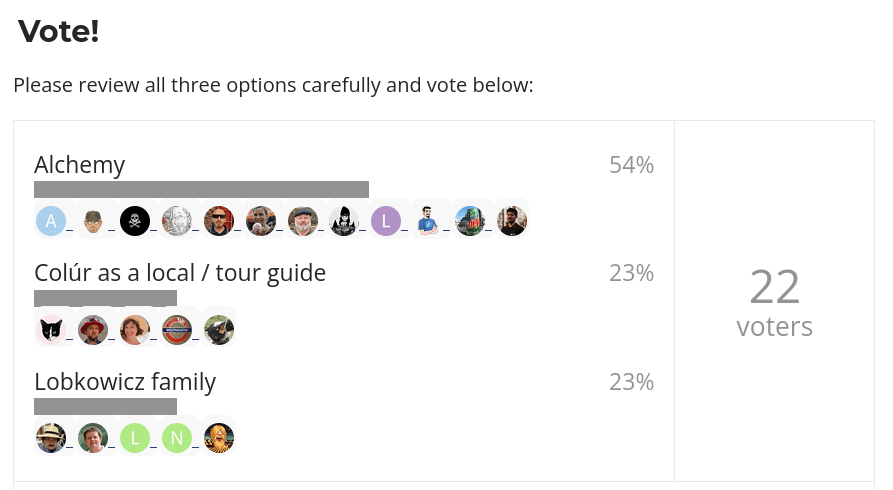
Since it was the second time Flock would be in Prague, we wanted to have the visuals be something beyond just the city and its architecture. I researched three potential Prague-related themes and posted them to the Fedora Discussions board. The community voted, and Alchemy was chosen as the winner.
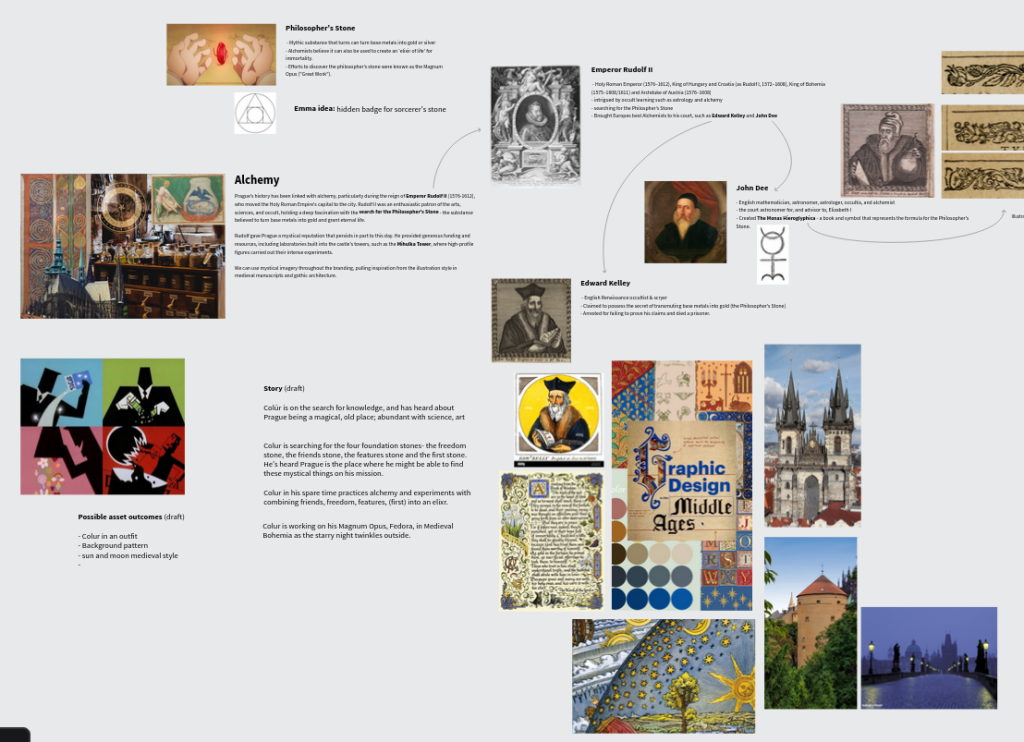
I held a brainstorming session with Madeline to research more in-depth how Alchemy relates to Prague. We created a mood board on Penpot and explored different directions we could go in. Concept sketches were created using the mood board as inspiration.

Step 2: Creating the SVGs
Once the team were happy with the sketches, I brought them into Inkscape to create the reusable SVGs. I made sure to label each element so if another designer were to open the file, it would be easy to see the separate layers.
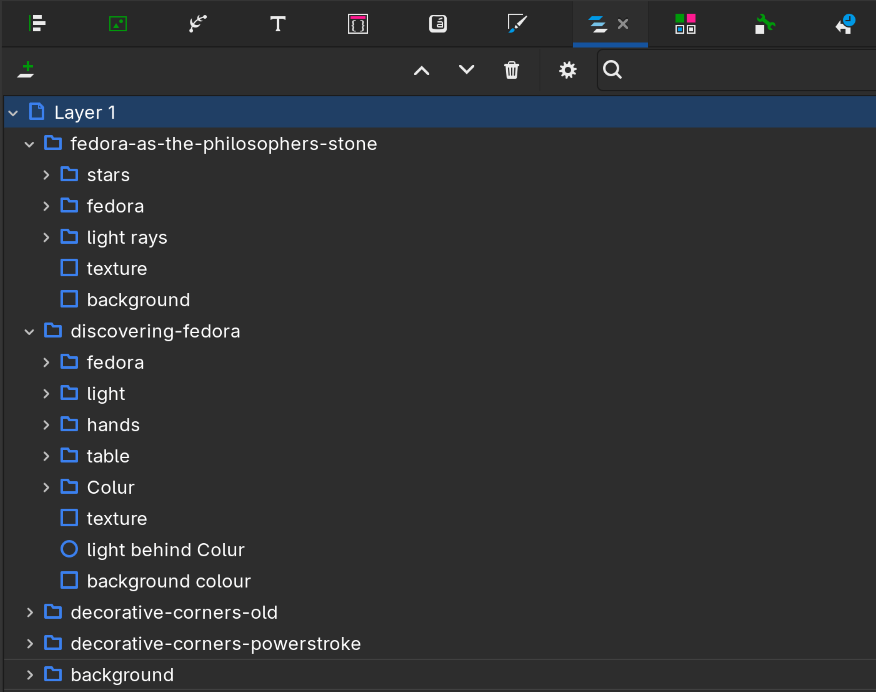
The SVGs were stored in a singular file and attached to each ticket to make it easily accessible to new contributors.

This step took more time than anticipated to complete. I would have liked there to be more time between when the SVGs were created and the final deadline for deliverables. Unfortunately, the SVGs were completed in early May, leaving just a few days for the deadline for printed materials and a month for digital. This time constraint prevented us from encouraging new members to help out.
Step 3: Final Assets
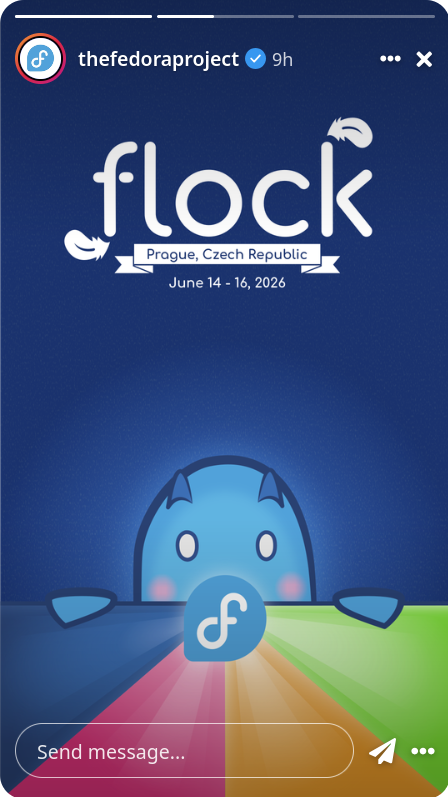
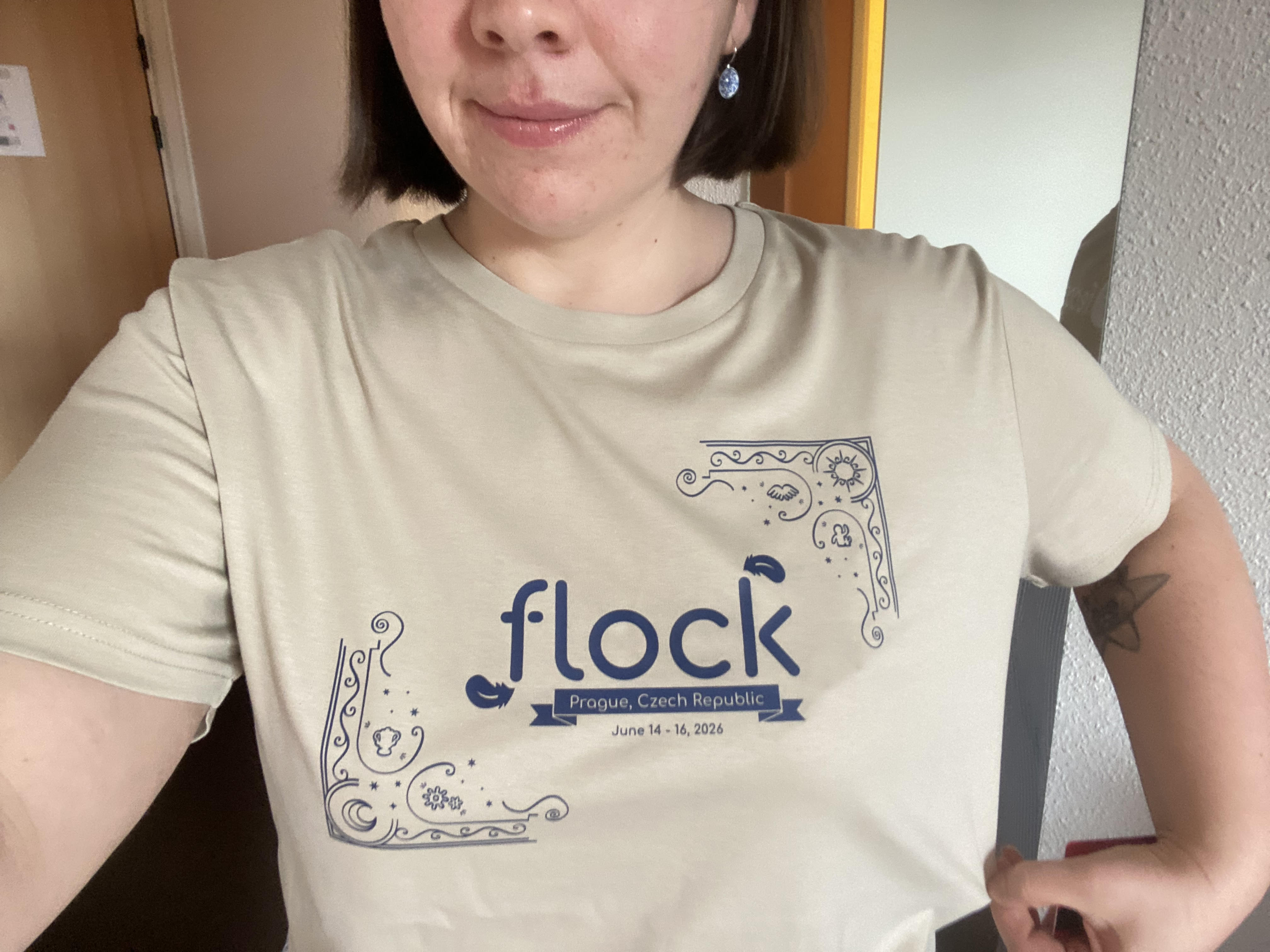
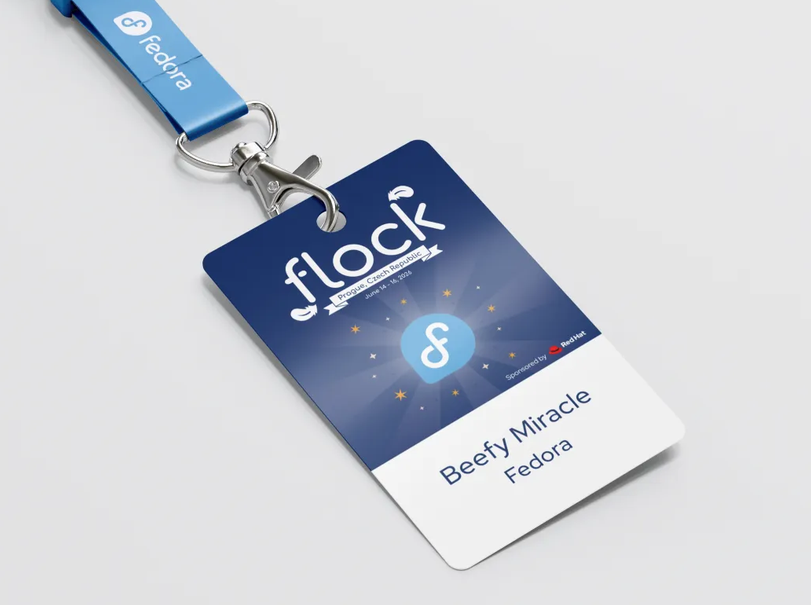
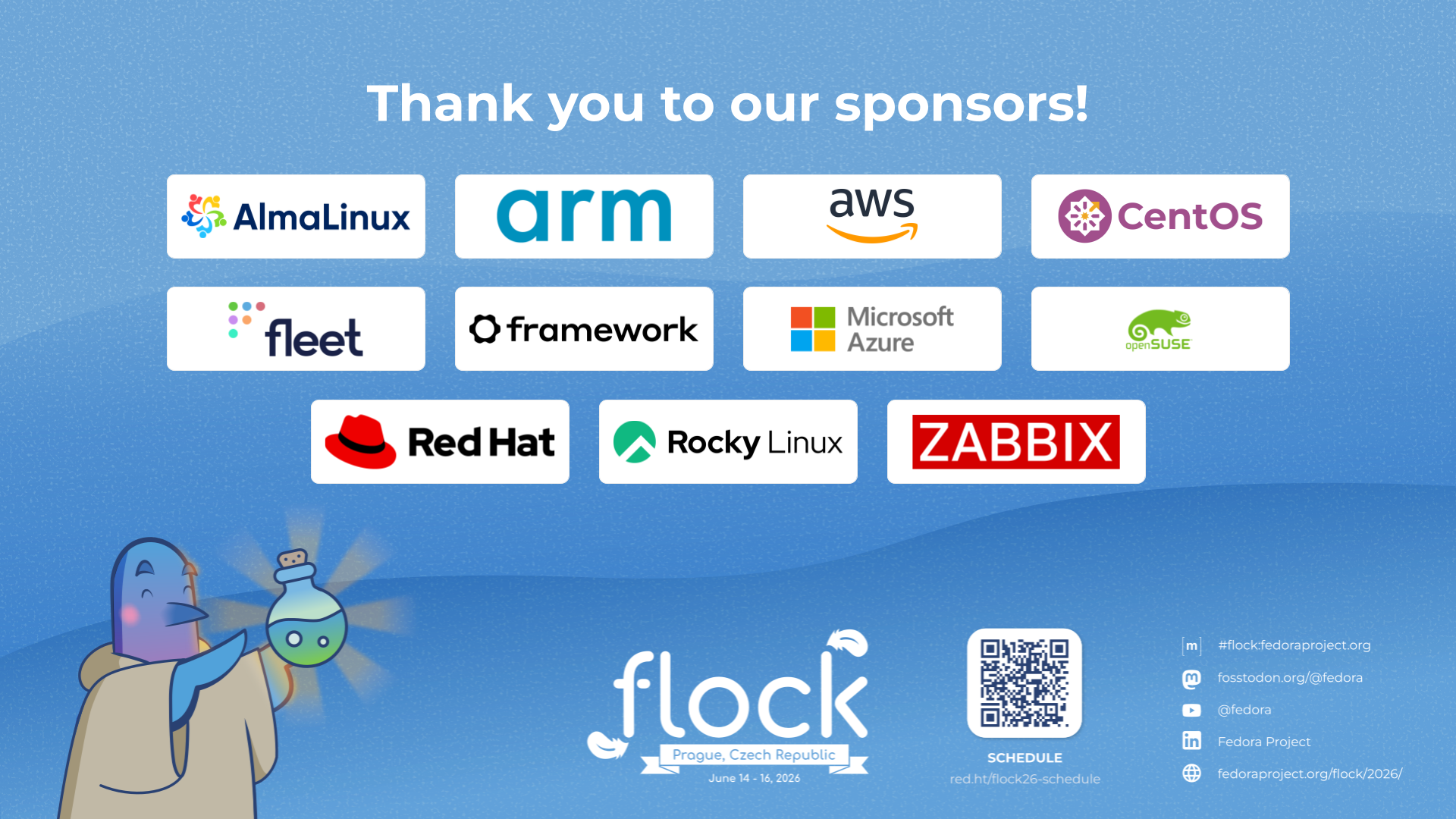
Tickets for Flock 2026 were labelled to make them easily identifiable. The heavy lifting was in the creation of the SVGs in the previous step, so applying them to the different materials, such as the t-shirt and name badges, took significantly less time than previous years.

Timeline
To give an idea of how long things took, here is the rough timeline of how this process actually played out.
- October–November: Initial concepts researched and discussion post drafted.
- November: Discussion post goes live and community votes for preferred theme.
- December–February: Pause due to the holidays and other project deadlines.
- February–March: In-depth research and concept sketches produced.
- April–early May: Creation of reusable SVGs
- May–June: Asset production, up until the day of Flock.
Outcome
All assets were delivered on time. Everything looked more cohesive when compared to the last few years, but there is still room for improvement. But with the groundwork done, this process can be iterated on and improved for next year.
Something we didn’t anticipate was how long vectorising the reusable library would take. The tight window meant it was harder to encourage new contributors to aid in the creation due to the short turnaround time. It also meant myself and Madeline were not able to provide feedback to new contributors while we worked on getting the assets created.
That being said, creating the final deliverables was much quicker than previous years. Since the SVGs served as the basis for designs, there was also less back and forth incorporating feedback, since a lot of it would have been done in the vectorisation stage.
What to change for next year
Time
This is something I aim to improve on for next year. I think starting the process in October was ideal, but now we can anticipate the time needed to vectorise the SVGs and accurately incorporate that into the timeline.
Open Call
I wanted to have everything organised and ready before involving the community, but I think that worked to my disadvantage, as when we were coming close to the deadline it was too late to put out an open call and get people up to speed. I aim to get an open call out perhaps after Christmas or in February, with the possibility of dedicated Flock design calls.
Conclusion
Overall, we are very happy with how the branding came out! Each year, we are able to gain real-time feedback and are continuously finding ways to improve our processes. Onward to 2027! Thanks for reading 🙂
If you would like to participate in polls for either the Flock branding or the wallpapers, keep an eye on the #design-team tag on Fedora Discussions.
To join our meeting or conversations, join #design:fedoraproject.org on Matrix or check out our Get Involved page on the Fedora Docs website.

